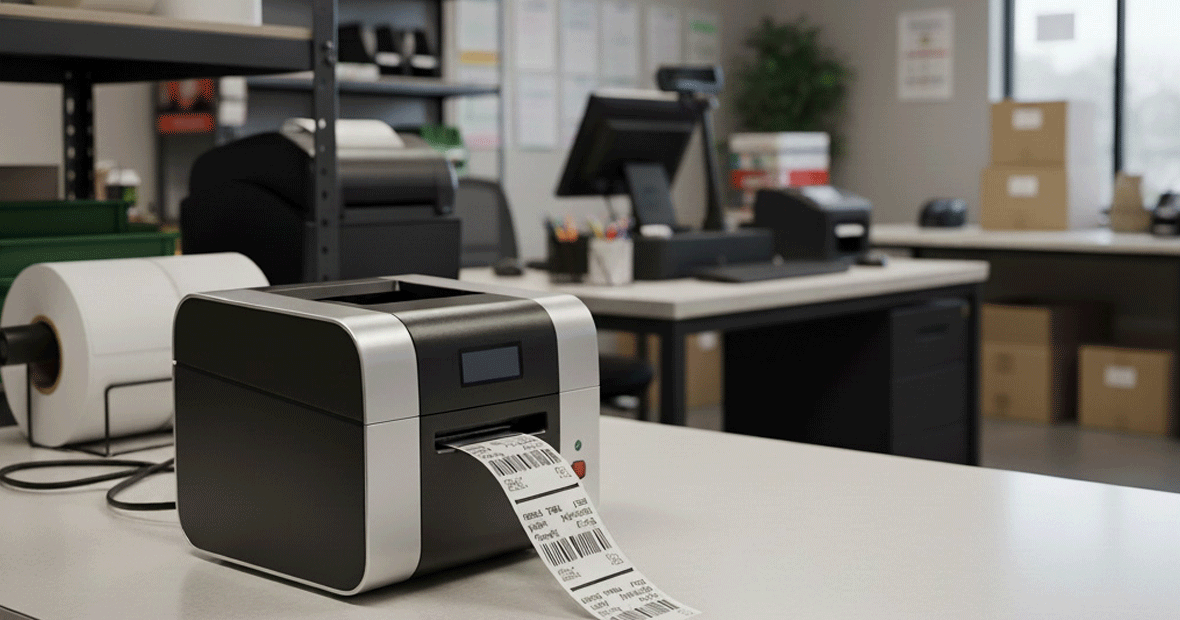
Graphic design is no longer confined to screens. Visual communication today spans websites, applications, packaging, signage, and physical interfaces that connect digital systems to the real world. Among these physical elements, labels play a critical yet often underestimated role. They convey information, structure content, and influence how users perceive clarity, quality, and trust.
As design practices evolve toward flexibility, accessibility, and sustainability, traditional labeling formats are increasingly at odds with modern visual thinking. Fixed dimensions, excessive material waste, and rigid production constraints limit creative expression. In response, Linerless printers are opening new possibilities for designers working at the intersection of graphic design, UX, and physical media.
Labels as a Design Medium
Labels are often treated as purely functional artifacts, designed only to display mandatory information. Yet from a design perspective, labels are micro-interfaces. They guide the eye, establish hierarchy, and shape how information is consumed.
In retail, labels influence readability and price perception. In logistics, they determine scanning accuracy and speed. In IT and facilities, labels affect asset identification and usability. In all these cases, visual clarity is not optional — it is essential.
Modern designers increasingly approach labels with the same principles applied to digital interfaces: hierarchy, spacing, typography, and consistency.
The Constraints of Fixed Label Formats
Traditional labels are produced in predefined sizes, forcing designers to adapt content to rigid dimensions. This often leads to compromised layouts: crowded text, inconsistent spacing, or unnecessary visual noise.
From a design standpoint, fixed formats create several problems:
- information hierarchy becomes difficult to maintain,
- typography must be reduced to fit available space,
- white space is sacrificed, reducing readability,
- design systems cannot scale consistently.
These constraints clash with contemporary design values, which prioritize clarity, modularity, and adaptability.
Variable-Length Labels as a Design Breakthrough
Linerless printing fundamentally changes how designers can think about labels. Because labels are cut on demand from continuous material, their length is no longer fixed. This single capability has profound design implications.
Designers can now:
- allocate space based on content rather than format,
- separate functional data from branding elements cleanly,
- maintain consistent margins and line spacing,
- adapt layouts dynamically without redesigning assets.
This approach mirrors responsive design principles used in web and app design, where layouts adapt to content and context rather than forcing content into static containers.
Improving Readability and Information Hierarchy
Readability is one of the most critical aspects of label design. Poor hierarchy leads to scanning errors, misinterpretation, and user frustration.
Linerless labels allow designers to structure information more logically. For example, a short asset label can display a bold identifier and barcode, while a longer label can include additional metadata without compromising clarity.
By adjusting label length dynamically, designers preserve visual rhythm and typographic integrity. This results in labels that are easier to read, easier to scan, and easier to trust.
Consistency Between Digital and Physical Design Systems
Modern brands and organizations rely on design systems to ensure consistency across channels. Typography, spacing, iconography, and color rules are carefully defined for digital environments.
Physical labels are often excluded from these systems due to production constraints. Linerless printing makes it possible to bring physical labels back into the design system.
Designers can apply the same grid logic, spacing rules, and typographic scales used in digital interfaces to printed labels. This creates a more coherent brand experience, where physical and digital touchpoints feel aligned.
Minimalism, White Space, and Visual Calm
Minimalist design relies heavily on white space and balance. Traditional labels often force designers to fill every available area, leading to cluttered visuals.
With linerless printing, labels can expand just enough to accommodate content comfortably. This allows designers to introduce breathing room, improving legibility and aesthetic quality.
In environments such as offices, retail spaces, or technical facilities, this visual calm contributes to a more professional and user-friendly atmosphere.
Supporting Accessibility and Usability
Accessibility is a growing concern in design, extending beyond digital products to physical environments. Labels must be legible for users with visual impairments, cognitive challenges, or limited familiarity with technical systems.
Linerless printing supports accessibility by enabling larger text sizes, clearer spacing, and better contrast without sacrificing content. Designers are no longer forced to compress information into fixed dimensions.
This flexibility improves usability in contexts such as asset management, healthcare, logistics, and public-facing services.
Sustainability as a Design Constraint
Designers increasingly work within sustainability constraints. Material choices, waste reduction, and environmental impact are now part of the design brief.
Traditional label liners generate waste that designers cannot control. Linerless printing removes this waste stream entirely, aligning design decisions with sustainability goals.
For designers, this means visual communication can be both effective and responsible, without hidden environmental costs.
Designing for Real-World Use Cases
Labels are rarely viewed in ideal conditions. They are read quickly, often under pressure, in environments with poor lighting or limited attention.
Linerless labels support real-world usability by allowing designers to optimize layouts for specific use cases. Short labels can be optimized for fast scanning, while longer ones can support detailed information when needed.
This adaptability ensures that design intent survives real-world constraints.
From Print Constraint to Design Opportunity
Historically, print production constraints have limited design possibilities. Linerless printing reverses this relationship, turning production into an enabler rather than a restriction.
By removing fixed formats and unnecessary waste, linerless printers allow designers to treat labels as flexible design components. This shift opens the door to more thoughtful, user-centered visual communication.
Where Graphic Design Meets Operational Reality
The most effective design solutions are those that balance aesthetics with practicality. Linerless printing operates precisely at this intersection.
Designers gain greater control over layout and hierarchy, while operations benefit from simpler workflows and reduced waste. This alignment strengthens collaboration between design, marketing, and operations teams.
Designing the Next Generation of Physical Interfaces
As digital and physical experiences continue to converge, labels will remain essential interfaces. They translate digital logic into tangible form.
Linerless printers enable designers to approach these interfaces with the same sophistication applied to digital products. Variable formats, cleaner layouts, and sustainable production transform labels from constraints into opportunities.
In this sense, linerless printing is not just a technical evolution — it is a design tool that supports clearer communication, better usability, and more responsible visual systems.